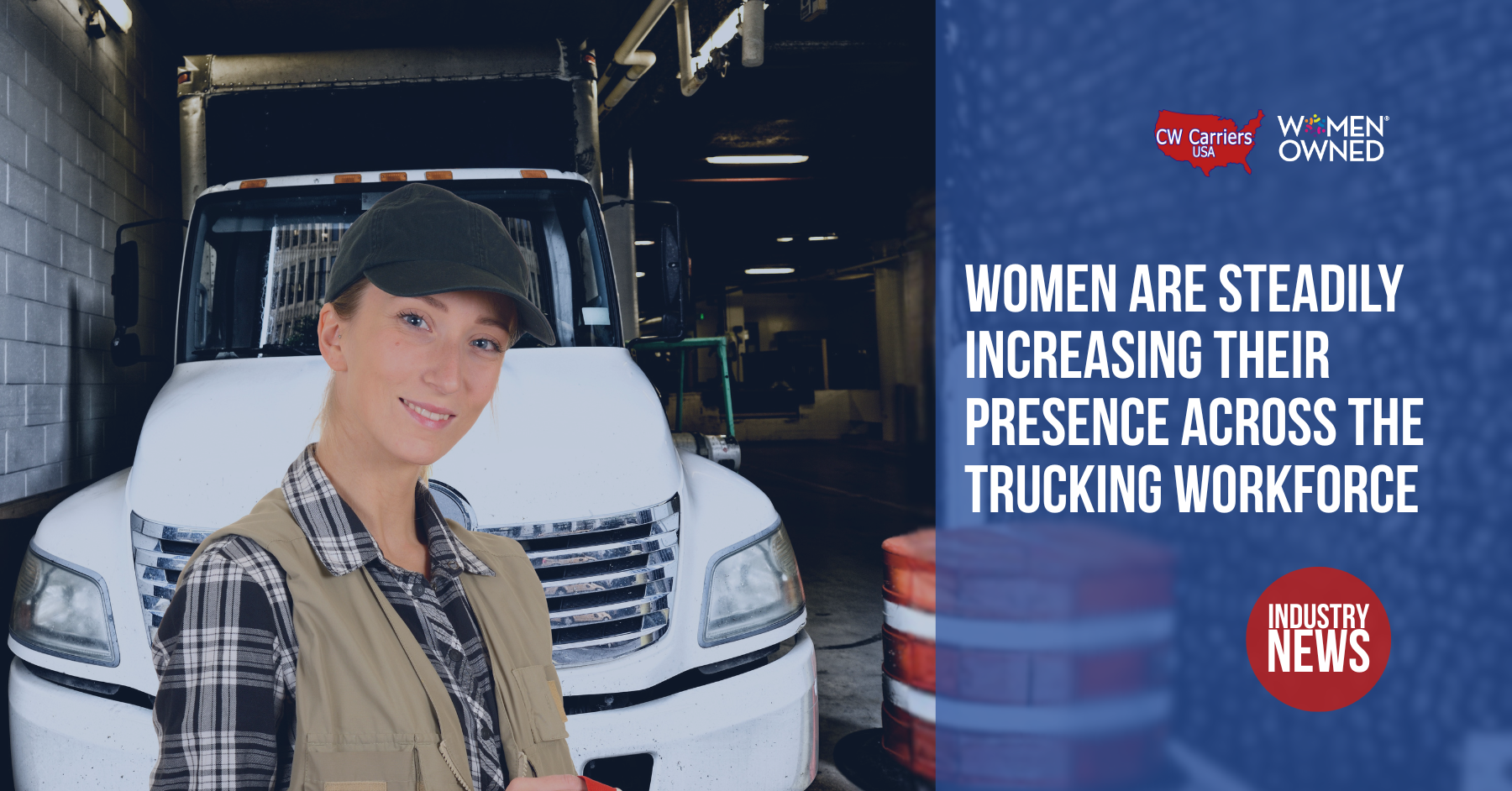
Women continue to play a growing role in the transportation and logistics industry, supported by targeted programs, education pathways, and workplace initiatives designed to expand access to trucking careers. According to reporting highlighted by FreightWaves, women currently make up approximately 14.7% of the transportation and material-moving workforce, reflecting steady progress over the past two decades.
The growth is especially visible in driving roles. In 2014, women represented about 5.8% of truck drivers. By 2024, that figure had increased to roughly 7.9%, signaling gradual but meaningful change in a historically male-dominated field. More broadly, women’s participation across transportation occupations has risen from 14.7% to 21.7%, demonstrating expanding opportunities throughout the supply chain.
These trends suggest that long-term workforce development efforts are beginning to deliver measurable results.
Early exposure programs are helping build the next generation of drivers
One of the key drivers behind this growth is increased early exposure to transportation careers. Programs such as Trucks Are for Girls, supported by organizations like the Girl Scouts, are introducing young students to the trucking industry through hands-on learning experiences.
Participants can explore truck driving simulators, interact with industry professionals, and learn about engineering and logistics roles through practical demonstrations. These types of programs help shift perceptions about trucking careers while building awareness of the wide range of opportunities available within the industry.
Education systems are also expanding their role in workforce development. Colleges and training institutions have significantly increased the number of programs focused on supply chain management, logistics, and commercial driver training.
Education and training pathways are expanding across the country
Access to formal transportation education has grown substantially over the past decade. Government data shows that in 2012, approximately 70 public universities offered four-year programs in supply chain management. By 2022, that number had more than doubled to around 159 institutions.
In addition to four-year degrees, many universities and community colleges now offer two-year programs in logistics and commercial driver training, including Class A CDL certification. These programs provide flexible entry points into the industry and help address long-term workforce shortages.
Scholarships, grants, and workforce development initiatives are also making transportation careers more accessible, particularly for individuals entering the field for the first time or transitioning from other industries.
Workplace safety and infrastructure remain important concerns
Despite the progress in workforce participation, safety remains a critical concern for many women working in trucking. Issues such as limited lighting, shared facilities, and insufficient security at some truck stops can create uncomfortable or unsafe conditions, particularly during overnight rest periods.
These concerns are increasingly recognized across the industry, and several organizations are working to improve conditions through targeted initiatives.
Technology is playing a growing role in addressing these challenges. For example, industry platforms are collaborating with advocacy groups to help drivers identify truck stops with safer amenities and better security features. Mobile applications now allow drivers to review facilities, share feedback, and locate locations that meet higher safety standards.
Improving infrastructure and safety conditions is widely viewed as essential for supporting long-term workforce growth.
Industry collaboration is strengthening support for women in trucking
The progress seen in recent years reflects coordinated efforts across multiple sectors. Workforce organizations, education providers, technology companies, and industry groups are working together to create more inclusive career pathways and improve working conditions across the transportation sector.
These partnerships are helping expand recruitment pipelines, strengthen retention strategies, and build a more resilient workforce.
As the trucking industry continues to evolve, supporting diverse participation is becoming a practical business priority as much as a social one. A broader talent pool helps carriers address labor shortages, improve operational flexibility, and strengthen long-term workforce stability.
In 2026, the conversation around women in trucking is no longer just about representation. It is increasingly about workforce sustainability, safety, and building a stronger transportation industry for the future.
