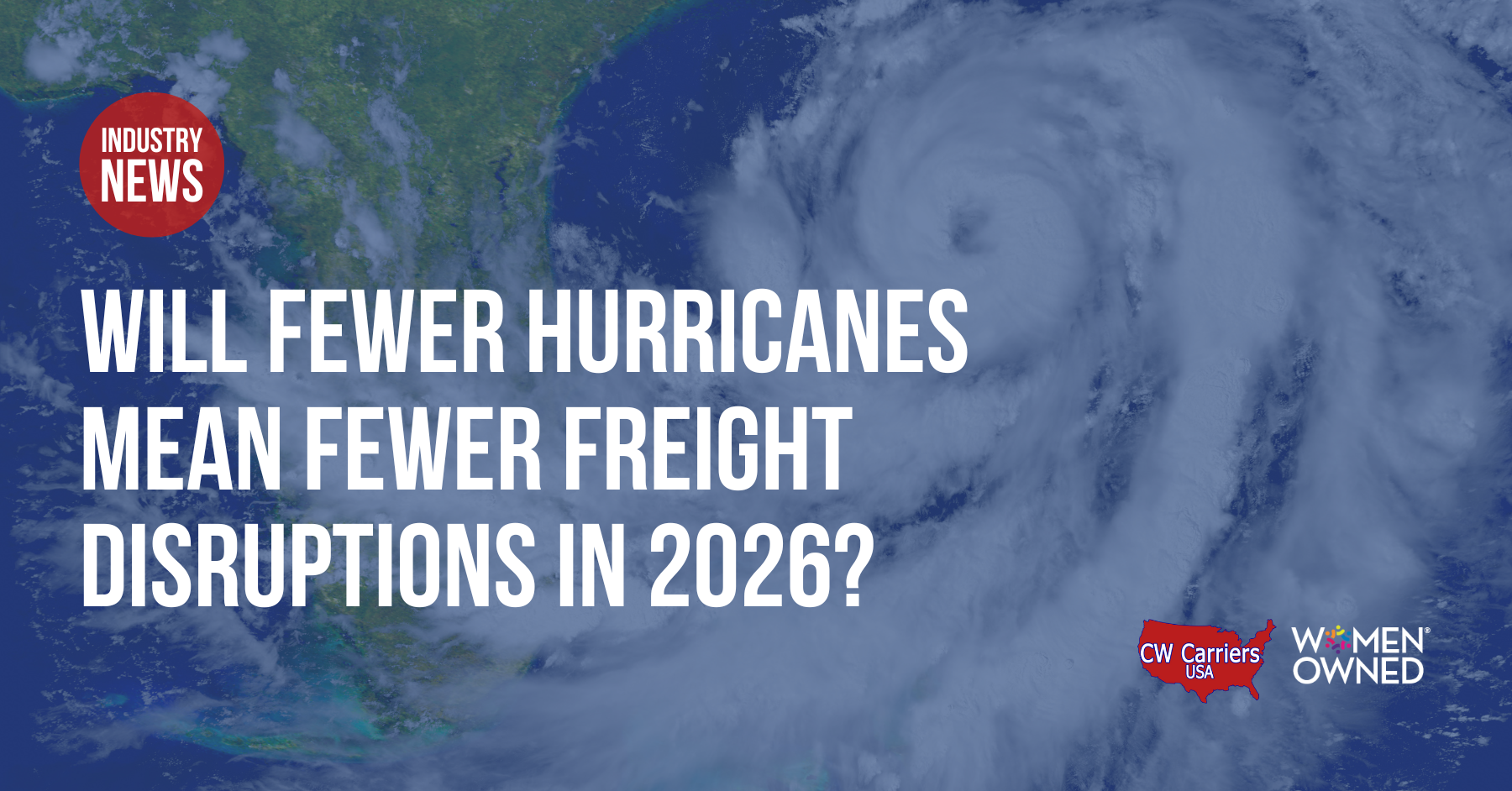
The 2026 Atlantic hurricane forecast may bring some encouraging news for the freight industry. Experts expect a less active hurricane season than in 2025, but that doesn't mean carriers, shippers, and logistics providers can afford to let their guard down.
According to DAT, even a quieter hurricane season has the potential to create significant freight disruptions, particularly for flatbed transportation. It only takes one major storm making landfall in the wrong location to impact freight capacity, delay deliveries, and drive transportation costs higher.
A quieter forecast doesn't eliminate risk
Forecasts provide valuable guidance, but they cannot predict where storms will form or where they will make landfall. One hurricane striking a major freight corridor, manufacturing hub, or Gulf Coast port can have nationwide consequences.
Ports may temporarily shut down, highways can become impassable, and construction projects often pause while recovery efforts begin. These disruptions ripple through supply chains long after the storm has passed.
For carriers, that can mean longer transit times, unexpected detours, and equipment repositioning challenges. For shippers, it often translates into delayed deliveries and increased transportation costs.
Why flatbed carriers are especially affected
Flatbed freight is closely tied to industries that are highly sensitive to severe weather.
Construction materials, steel, lumber, machinery, roofing products, utility equipment, and infrastructure components all experience shifts in demand before and after major storms.
Ahead of a hurricane, emergency supplies and utility equipment often move into affected regions. Once the storm passes, reconstruction efforts can drive increased demand for building materials and specialized transportation capacity for weeks, or even months.
This surge in demand frequently tightens flatbed capacity and puts upward pressure on spot market rates.
Freight disruptions extend beyond the storm itself
The greatest transportation challenges often occur after the weather clears.
Damaged infrastructure, temporary road closures, power outages, flooded facilities, and labor shortages can slow freight movement long after a hurricane leaves the area.
Even businesses located hundreds of miles from the storm may experience supply chain delays if suppliers, ports, or distribution centers in affected regions are unable to operate at full capacity.
As supply chains become increasingly interconnected, localized weather events can quickly create nationwide transportation challenges.
Preparation remains the best strategy
While no carrier or shipper can prevent weather-related disruptions, preparation can significantly reduce their impact.
Companies should continue monitoring seasonal forecasts while maintaining contingency plans that include:
- flexible routing options
- proactive communication with customers
- diversified carrier networks
- real-time shipment visibility
- capacity planning for high-risk regions
Planning ahead allows businesses to respond more quickly when conditions change and helps minimize service disruptions during severe weather events.
What this means for the freight market in 2026?
A less active hurricane forecast is certainly positive news, but it should not be mistaken for a disruption-free freight market.
History has shown that the overall number of storms is often less important than where they occur. A single hurricane affecting key transportation corridors or Gulf Coast infrastructure can tighten capacity, increase spot rates, and reshape freight flows across multiple regions.
For carriers, shippers, and logistics providers, the focus should remain on resilience rather than forecasts alone. Companies that prepare early and maintain operational flexibility will be better positioned to navigate whatever the 2026 hurricane season brings.
